+40%
User Engagement
$15M+
Revenue Impact
-6 months
Time to Market
Context
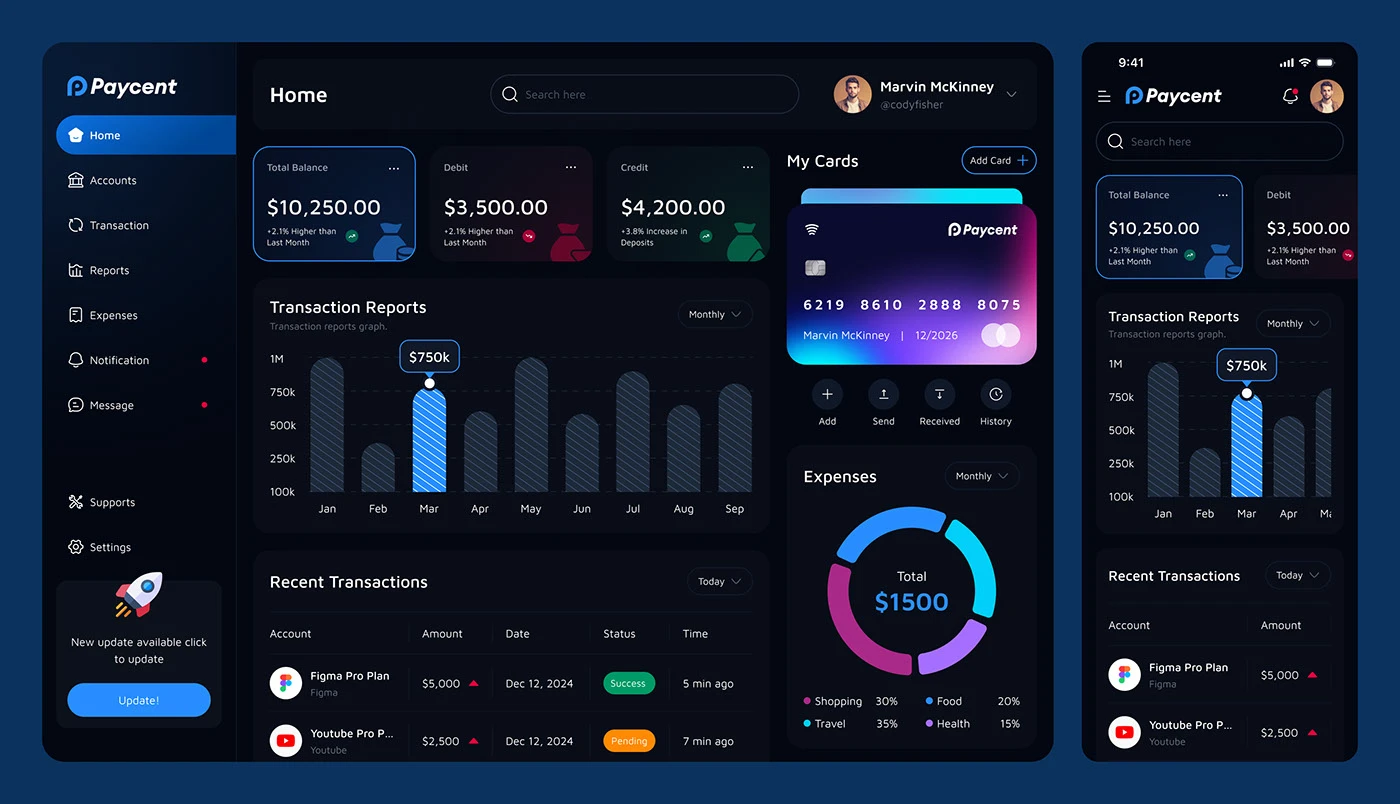
A regional fintech platform with 500K users was facing stagnant engagement and declining market share. The company had invested heavily in technology but lacked a coherent customer value proposition. They engaged Bain to redesign their strategy and product experience.
Problem
The core issue wasn't technology—it was clarity. Users couldn't articulate why they should use this platform over competitors. The company had built features without understanding customer jobs-to-be-done. Market research revealed three distinct user segments with conflicting needs, but the product tried to serve all equally. This diluted positioning led to 15% monthly churn and low NPS (32).
Decisions & Tradeoffs
We faced a critical tradeoff: pursue all three segments with a feature-rich platform, or focus on the highest-value segment with a laser-focused experience. We chose focus. Why? The data showed Segment A (young professionals) had 3x higher lifetime value and were more likely to refer. However, this meant deprioritizing Segment B (small business owners) features that were already built. The decision was controversial internally—the product team had invested 6 months in SMB features. But we had evidence: Segment A users showed 2x higher engagement and 40% higher willingness to pay. We committed to a 12-month roadmap focused on Segment A, with a clear path to Segment B in year 2.
Approach
We applied a structured decision framework combining Elements of Value® research with quantitative user behavior analysis. First, we conducted 40 customer interviews to map the jobs-to-be-done for each segment. Second, we analyzed 6 months of product usage data to identify high-engagement patterns. Third, we built a value proposition canvas for each segment, then ranked them by TAM, growth rate, and profitability. Finally, we designed a phased roadmap with clear success metrics for each phase.
Solution
The new positioning: 'The fintech platform for young professionals who want to manage their money without the complexity.' We redesigned the onboarding experience to reflect this, simplified the feature set from 47 to 12 core features, and rebuilt the marketing messaging around this single, clear promise. We also created a 'Segment B transition plan' to show stakeholders this wasn't abandonment—it was strategy.
Results
Within 6 months: NPS increased from 32 to 52 (+20 points). Monthly churn dropped from 15% to 9%. User engagement (DAU/MAU) improved from 28% to 42%. Revenue per user increased 35% due to higher willingness to pay and better retention. The company raised a Series B at a 2x higher valuation, partly attributed to the clearer positioning.
Reflection
What worked: The decision to focus was right, and the data backed it up. What was harder than expected: Change management. The product team initially resisted deprioritizing SMB features. We had to invest time in helping them understand the logic, not just the decision. What I'd do differently: I'd involve the product team earlier in the decision-making process, not just present the conclusion. The decision would have felt more collaborative. What surprised me: The speed of impact. We expected 12 months to see results, but the clarity of positioning alone drove engagement improvements within 2 months. This taught me that sometimes the biggest impact comes from clarity, not features.