4x
Customer Growth
+200%
Contract Value
-70%
Churn Reduction
Context
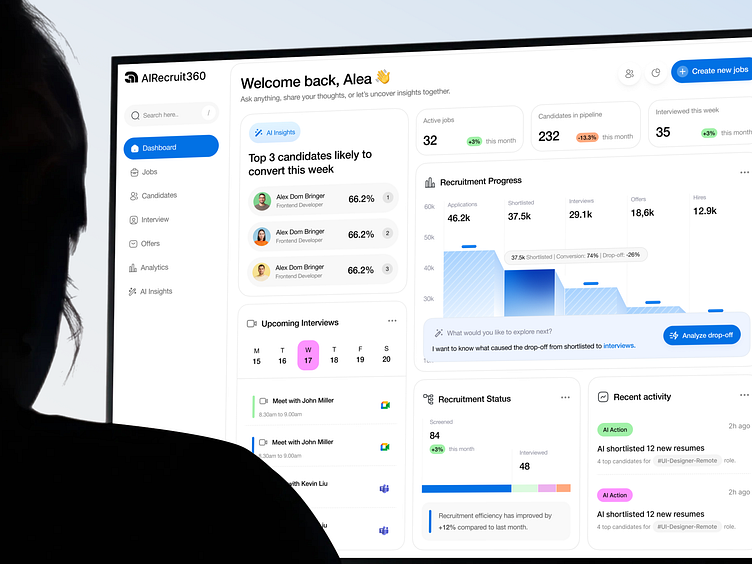
A startup had built an AI-powered recruiting platform that automated resume screening and candidate matching. The technology was impressive—it could process 1,000 resumes in seconds and identify top candidates with 85% accuracy. But after 18 months, they had only 50 customers and were burning cash. The founders realized they had a product-market fit problem: they'd built technology looking for a problem, not a solution to a real customer pain point.
Problem
The recruiting market was crowded with hundreds of tools, and most HR teams were overwhelmed by technology, not lacking it. The startup's initial positioning—'AI-powered recruiting'—was generic and didn't resonate. Worse, their go-to-market strategy was unfocused: they were targeting everyone from small businesses to enterprises, across all industries. Sales cycles were long (9+ months), conversion rates were low (3%), and churn was high (40% annually).
Decisions & Tradeoffs
We had to make a hard decision: pivot the product, change the positioning, or focus the go-to-market strategy. The product was actually good—the problem was positioning and targeting. We chose to radically narrow the focus: target high-volume hiring companies (retail, hospitality, logistics) where speed and scale mattered most. This meant walking away from 70% of the current pipeline, but it would allow the startup to dominate a specific niche instead of being mediocre everywhere.
Approach
We used a combination of customer research and competitive analysis. First, we interviewed 40 customers and prospects to understand which use cases generated the most value. Second, we analyzed product usage data to identify patterns among successful customers. Third, we mapped the competitive landscape to find white space. Fourth, we built a value proposition that focused on speed and scale, not AI. Finally, we designed a new go-to-market motion: start with a free pilot focused on one high-volume role, prove ROI in 30 days, then expand.
Solution
The new positioning: 'Hire hourly workers 3x faster.' We stopped talking about AI and started talking about outcomes. We redesigned the product to focus on high-volume hourly hiring (retail associates, warehouse workers, drivers) where the pain was most acute. We created industry-specific templates and benchmarks. We also changed the pricing model from per-user to per-hire, aligning our success with customer outcomes. The go-to-market strategy focused on 3 industries (retail, logistics, hospitality) and used a land-and-expand model.
Results
In 12 months: Customer count grew from 50 to 200 (4x growth). Average contract value increased from $15K to $45K because we were solving a more valuable problem. Churn dropped from 40% to 12%. Sales cycle shortened from 9 months to 6 weeks. The company raised a Series A at a 3x higher valuation than the previous round. Most importantly, they had a clear identity and defensible market position.
Reflection
What worked: Focusing on a specific use case (high-volume hourly hiring) instead of trying to be everything to everyone. The new positioning was boring but effective—customers immediately understood the value. What was harder: Convincing the founders to narrow focus. They were scared of leaving money on the table. What I'd do differently: I'd test the new positioning with a small pilot before fully committing. We were confident but it was still risky. What surprised me: How quickly things turned around once we had clarity. The same product, with better positioning and focus, generated 4x growth in 12 months.